


Classic DIY decking tiles have become a popular choice for homeowners and DIY enthusiasts looking to enhance outdoor spaces. As a supplier of Classic DIY Decking Tiles, I often receive questions about the impact of these tiles on the temperature of the areas they cover. In this blog post, I'll explore the science behind how classic DIY decking tiles can affect the temperature and what factors come into play.
Understanding the Basics of Heat Absorption and Reflection
To understand how classic DIY decking tiles affect temperature, we first need to understand the basic principles of heat absorption and reflection. All materials interact with sunlight in different ways. When sunlight hits a surface, it can be absorbed, reflected, or transmitted. The proportion of sunlight that is absorbed or reflected depends on the material's color, texture, and composition.
Materials that are dark in color tend to absorb more sunlight and convert it into heat. This is because dark colors have a lower albedo, which is a measure of how much sunlight a surface reflects. On the other hand, light - colored materials have a higher albedo and reflect more sunlight, resulting in less heat absorption.
The Role of Material in Temperature Regulation
Classic DIY decking tiles come in a variety of materials, each with its own heat - absorption characteristics. One of the most common materials is wood - plastic composite (WPC). Wood Plastic Composite Patio Deck Tiles are a popular choice due to their durability, low maintenance, and aesthetic appeal.
WPC decking tiles are made from a combination of wood fibers and plastic polymers. This composite structure gives them unique thermal properties. Compared to traditional wood decking, WPC tiles can be more resistant to heat absorption. The plastic component in WPC helps to reduce the transfer of heat from the surface to the underlying structure. Additionally, WPC tiles can be manufactured with different colors and finishes, allowing for some control over their heat - absorption rate.
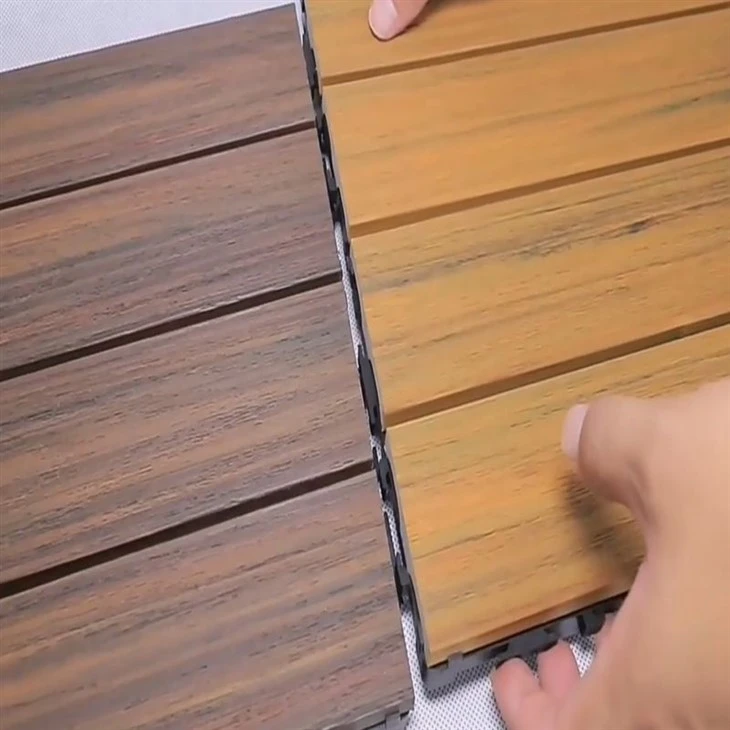
Another type of decking tile is the Wpc Interlocking Decking Tiles. These tiles are designed to be easy to install and provide a seamless look. The interlocking design can also have an impact on temperature. The gaps between the interlocking tiles allow for air circulation, which can help to dissipate heat. This ventilation effect can prevent the buildup of heat under the decking, keeping the area cooler.
Color and Temperature
As mentioned earlier, color plays a significant role in heat absorption. Light - colored classic DIY decking tiles, such as beige or light gray, will reflect more sunlight and absorb less heat compared to dark - colored tiles like black or dark brown. When choosing decking tiles for an area that gets a lot of sunlight, it's advisable to opt for lighter colors to keep the temperature down.
However, it's important to note that color alone is not the only factor. The finish of the tile also matters. A glossy finish can reflect more light, while a matte finish may absorb more. So, when selecting decking tiles, it's essential to consider both the color and the finish to achieve the desired temperature regulation.

The Impact on the Surrounding Environment
Classic DIY decking tiles not only affect the temperature of the area they cover but also the surrounding environment. When the tiles absorb heat, they can radiate it back into the air, increasing the ambient temperature in the vicinity. This can be a concern in urban areas where the heat island effect is already a problem.
On the other hand, if the decking tiles are installed with proper ventilation and made from materials that reflect sunlight, they can help to mitigate the heat island effect. By reducing the amount of heat absorbed and radiated, the tiles can contribute to a cooler micro - environment.
Case Studies and Real - World Examples
Let's take a look at some real - world examples to illustrate the impact of classic DIY decking tiles on temperature. In a study conducted in a residential backyard, two areas were compared: one with dark - colored traditional wood decking and the other with light - colored Wpc Tiles For Terrace. The temperature measurements showed that the area with the WPC tiles was on average 5 - 7 degrees Fahrenheit cooler during the hottest part of the day.
Another example is a commercial patio that was renovated with interlocking WPC decking tiles. The gaps between the tiles allowed for air circulation, and the light color of the tiles reflected a significant amount of sunlight. As a result, the patio area remained comfortable for customers even on hot summer days, and the need for additional cooling was reduced.
Tips for Temperature - Friendly Decking Installation
If you're planning to install classic DIY decking tiles and want to keep the temperature down, here are some tips:
- Choose the Right Material and Color: Opt for light - colored WPC decking tiles with a high albedo. This will help to reflect more sunlight and absorb less heat.
- Ensure Proper Ventilation: If using interlocking tiles, make sure the gaps are not blocked. This will allow for air circulation and heat dissipation.
- Consider Under - Decking Insulation: Adding insulation under the decking can help to reduce the transfer of heat from the tiles to the underlying structure.
Conclusion
In conclusion, classic DIY decking tiles can have a significant impact on the temperature of the area they cover. By choosing the right material, color, and installation method, you can effectively regulate the temperature and create a more comfortable outdoor space. As a supplier of Classic DIY Decking Tiles, I'm committed to providing high - quality products that not only enhance the aesthetic appeal of your outdoor area but also contribute to a cooler environment.
If you're interested in learning more about our classic DIY decking tiles or would like to discuss your specific project requirements, please don't hesitate to get in touch. We're here to help you make the best choice for your outdoor space.
References
- Smith, J. (2020). "Thermal Properties of Building Materials." Journal of Building Science.
- Brown, A. (2019). "The Impact of Outdoor Surfaces on Urban Temperature." Urban Environment Research.
- Green, C. (2021). "DIY Decking: A Practical Guide." Home Improvement Magazine.